
oi

Restructuring of Havan's e-commerce purchase flow, aiming to simplify the process in order to increase revenue.

The objective of this project was to create a new purchase flow to provide a better experience for customers on the website in order to improve some important KPI's such as conversion rate optimization, decrease in churn and increase in new paying users, which consequently directly impacts the business revenue.
It was very common to hear in quantitative or NPS surveys customers complain about the shopping experience on the site, and this dissatisfaction also came from stakeholders, claiming that bottlenecks in the flow were the main reason for the large number of abandoned carts. From then on, the decision was jointly taken to kick-off this initiative.
The main challenges were to align the expectations of all stakeholders and develop a solution that did not generate a large cognitive load on the user, causing some kind of strangeness in the process.
To bring all stakeholders and developers to the same page, I developed a roadmap that gave visibility to the processes and what would be the main checkpoints of this project. In addition, I made a sitemap as the main decision points of the old purchase flow in order to preserve the information architecture as much as possible.
The result was a completely innovative and disruptive flow, which considerably reduced the effort to make a new purchase, in addition to considerably facilitating the purchase of users who already had a registration on the site.
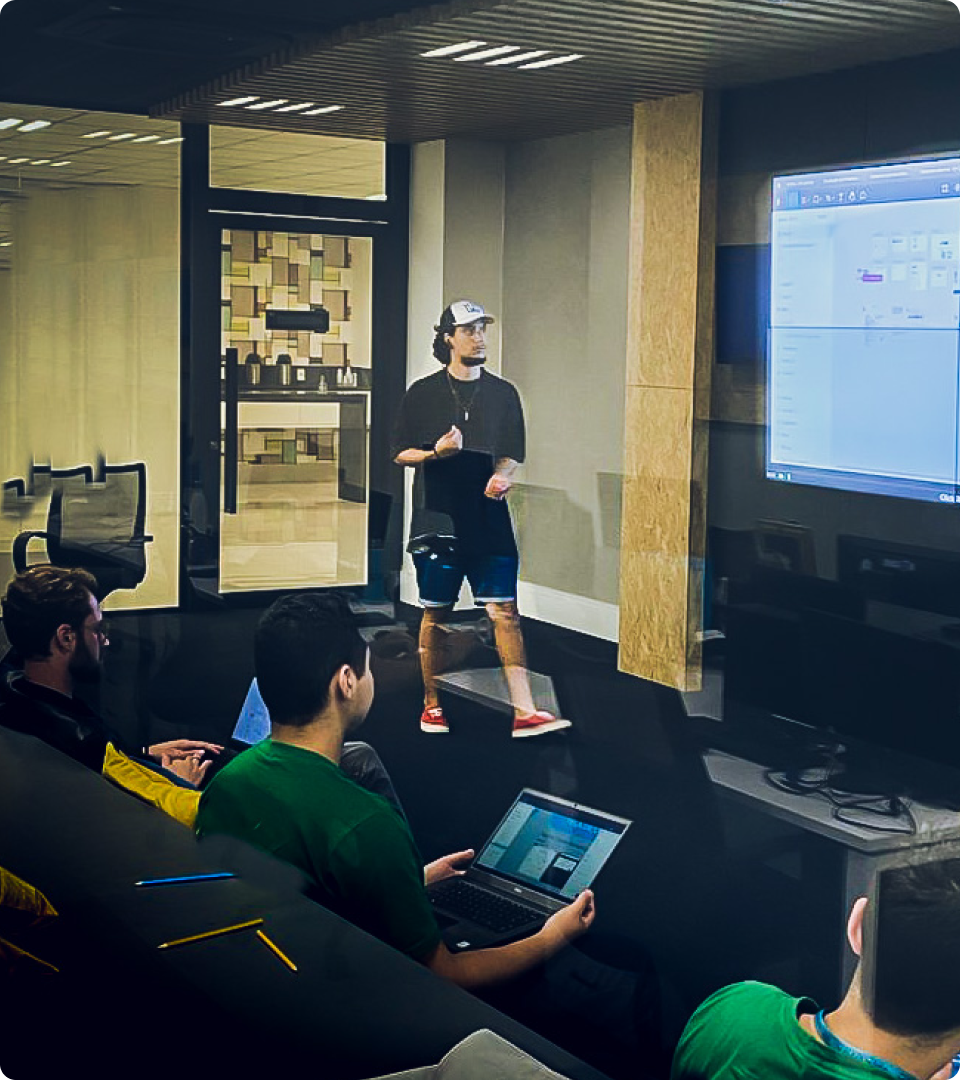
Before undertaking any design effort, it was important to design an action plan that was coherent and objective. In addition, it was important to carry out an in-depth benchmarking of existing solutions on the market to be able to discern what was good practice and what was an opportunity for improvement. So the plan was:
Carefully study all analyzes done previously
Involve all stakeholders and developers in the creation process;
Create an improvement proposal;
Present to stakeholders seeking a “go ahead” for change;
Structure a usability test plan
Run the tests
Handoff to Dev. team
Develop the new flows
A/B testing in production
Analyze the results
Deploy
As one of our goals was to preserve those points that were considered positive, I decided to analyze the user's journey in order to be able to clearly identify each step of the purchase. To make the proposal tangible, I made wireframes of the flow listing each step of the process to validate the flow, this step was very iterative and collaborative with short feedback cycles, to avoid rework or unnecessary effort.
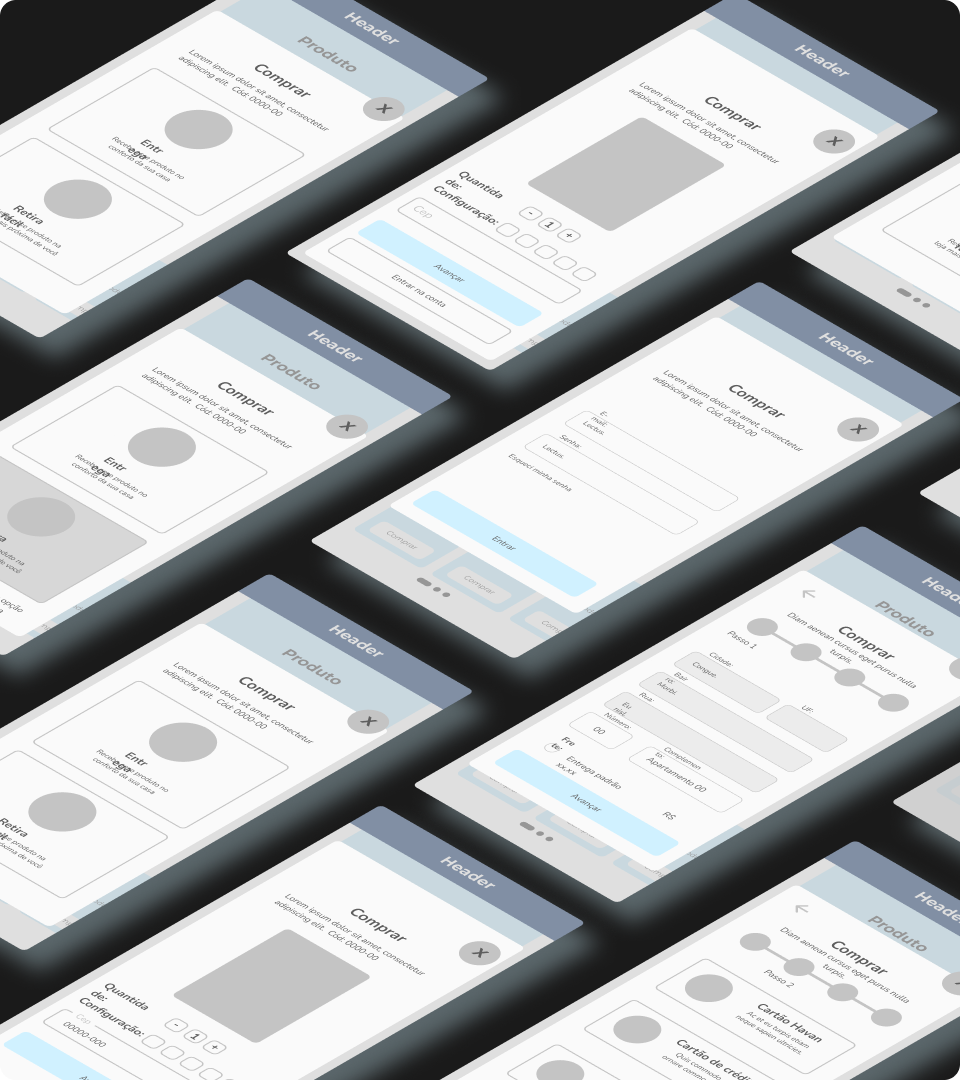

After validating the flow, I moved the entire framework to high fidelity so that we could proceed with usability testing. The target audience profile was defined seeking to replicate Havan's ethnographic scenario, with data extracted from PowerBi. The tests would be done in 3 rounds with different audiences as follows:
1 - Internal users (employees)
2 - External users (database clients from states other than SC)
3 - External test in 3 Havan stores in the state of SC.
In addition, each round would have 5 users and would be done qualitatively with SC users and remotely via Maze with users from out of state. To capture users, the intention was to release a quantitative form with basic questions, and make a profile fit with interested parties. After performing the test, the data obtained should be computed and analyzed and the proposed and observed improvements would be weighted, if relevant, taken into account.


